Afoni Children of Hope Foundation
ACOHOF - Cameroon
Motto: Hope for the Underprivileged
Afoni Children of Hope Foundation
ACOHOF - Cameroon
Motto: Hope for the Underprivileged
The Tatum Community Water Initiative
Afoni Children of Hope Foundation’s Call to Partners for Clean Water, Dignity, and Lasting Community Resilience
Executive Summary
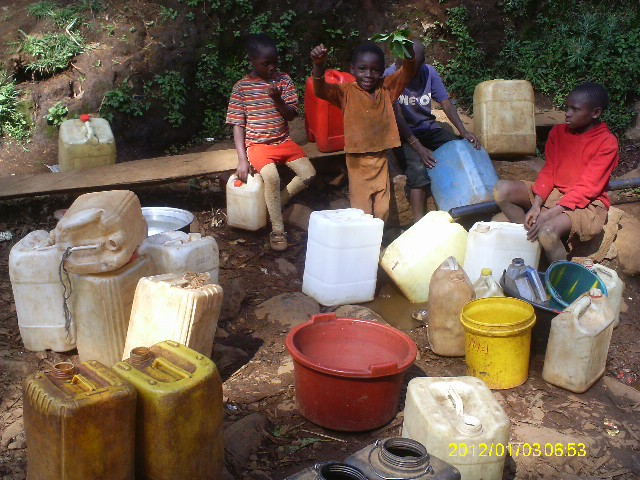
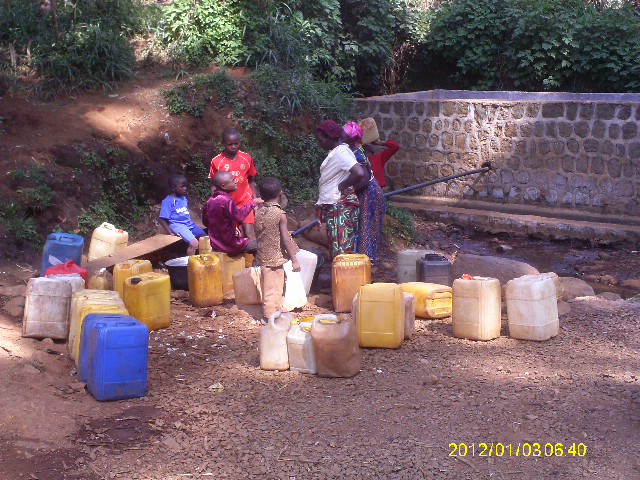
Tatum’s long-standing water crisis continues to affect public health, education, household stability, and community development. ACOHOF seeks renewed donor partnership to complete a practical pathway to clean and dependable water through the Waccess gravity-fed system, technical assessment of viable historic infrastructure, and coordinated community ownership.
Investment Priorities
ACOHOF is seeking strategic donor, CSR, and development partner support to move Tatum from temporary coping strategies to a reliable community water system.
1. Complete the Waccess gravity-fed pipeline system: Fund catchments, heavy-duty pipeline materials, valves, and installation support needed to deliver clean spring water to priority users.
2. Commission technical feasibility assessment: Review the historic Mairin turbine area and related assets to determine safe rehabilitation, pumping, or training potential.
3. Strengthen local maintenance capacity: Train community technicians and establish practical systems for long-term operation, monitoring, and protection of water infrastructure.
1. Background: Tatum’s Growth and Water Need
Tatum’s need for clean and reliable water is rooted in a long history of growth, resilience, and unmet infrastructure needs. The village takes its name from two hills at its peak, and over time people from neighboring villages such as Mbam, Memfu, Kishong, and Tsen Ntsam settled in the area and helped it grow. By around 1950, about 1,000 people lived in Tatum and nearby villages in what is now Nkum Subdivision, along the Kumbo–Nkambe highway.
1.1 Church, Education, and Early Water Initiatives
At that time, local leaders sought to establish a Roman Catholic parish for the whole of Nkum Subdivision. Ngondzen and Nzeruh also competed for the parish, but local leaders ultimately established it in Tatum because of its central location within the hilly area. The Catholic parish began its presence in Tatum around 1958, serving the wider Nkumbam and Nkumkov area. Around 1960, the parish priest, Reverend Father Boma, arrived and initiated an early water supply effort by building a standpipe in the Kichoo valley.
As development continued, soil erosion became a growing problem. In the same period, the Tea Estate opened and a one-year elementary Teacher Training College was planned. The growing number of students, parish workers, and Tea Estate workers increased water demand, while the Kichoo source became too small and increasingly affected by erosion.
The Reverend Father in charge later negotiated the construction of a water pump station at a site in Sovdzen, which Teacher Training College students called “West Indies.” Diesel-powered engines installed there supplied water to the college, while negotiations also led to the establishment of a health center where women could give birth. These developments accelerated Tatum’s population growth.
Together, these projects helped Tatum grow faster than expected and created an urgent need for a dependable water system that could protect health, sustain education, and support community development.
2. Lessons from Early Water Infrastructure
With the parish, health center, Teacher Training College, and Tea Estate all contributing to population growth, Tatum became a larger settlement with rising water demand. Around 1968, residents began to recognize the need for a more reliable system. A Swiss engineer surveyed potential sites for fountains, but no suitable location was identified until around 1974, when the wider beneficiary population had grown to about 2,000 people.
Teachers at the Teacher Training College, including the late Shey Njobam Gabriel Verye, began building around the college, the mission, and the surrounding areas, alongside people working at the Tea Estate. Around 1975, the community negotiated with Swiss volunteers based in Ndu under the organization SATA—the Swiss Association for Technical Assistance on Community Development in Cameroon. After conducting surveys, the engineer concluded that Tatum required a more technically planned system drawing from sources beyond the immediate settlement area.
The engineer determined that clean water would require returning to the Sovdzen source in the “West Indies” area. Because the source was below the main settlement and the college, the community pursued a hydroelectric pumping system. The water source was about three kilometers from Tatum, and SATA supported technical training in water supply, building construction, carpentry, surveying, and related skills, demonstrating the importance of pairing infrastructure with local capacity.
3. Hydroelectric Water System and Technical Management
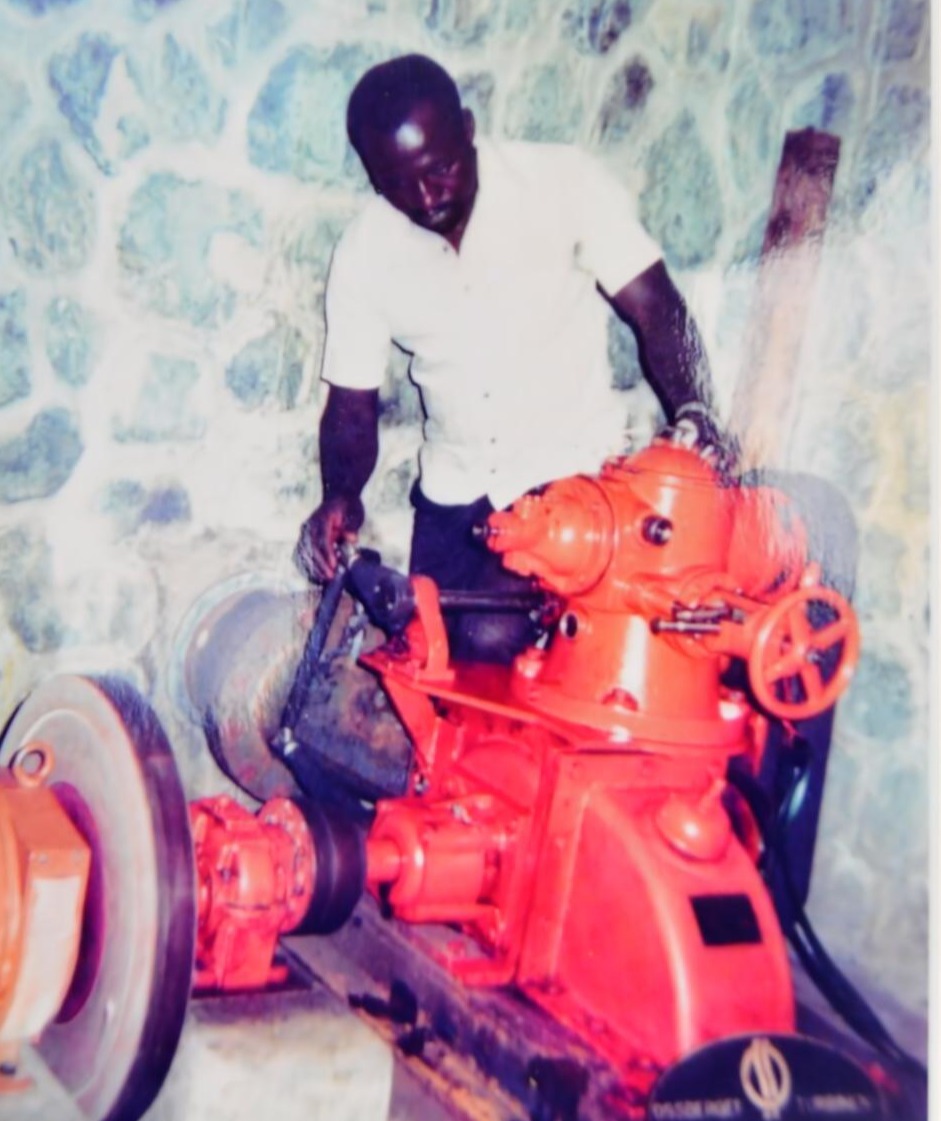
In 1976, Mr. George Fonyuy graduated from the School of Water Supply in Kumba and was temporarily employed by SATA. In March 1976, he began installing the hydroelectric station under the guidance of a German engineer. The system used the River Mairin to generate electricity, transmitted about three kilometers to pump water nearly 180 meters uphill, before supplying Tatum by gravity. The mission, college, and health center also benefited from electricity for lighting and domestic use. The system generated about 18 kilowatts and operated day and night under Mr. Fonyuy’s technical supervision.
Because the community could not manage the project independently at that stage, Mr. Fonyuy was appointed as a technician in charge to help prevent system failure. The Teacher Training College later employed him in October 1978. He handled reporting and supervision, while maintenance support was transferred to the late Reverend Brother George Beaman, who was in charge of technical services at the workshop in Bamenda. This arrangement helped strengthen Mr. Fonyuy’s knowledge of hydropower operations and electricity generation.
Mr. Fonyuy’s technical background included training in general mechanics, electricity, plumbing, and related practical skills. The system worked effectively from June 1976 until about 1986, when drought reduced water volume, especially during the dry season. Around 1987, the community negotiated permission to construct a dam that could store water for use during dry periods.
3.1 Technical Operations and Line Modifications
The system’s technical configuration was substantial for its time. The German-provided turbine drove the generator that produced hydroelectricity, while Mr. George Fonyuy managed daily operations and monitored the installation that powered the pumping system.
When underground transmission cables began causing frequent short circuits, Mr. Fonyuy and the technical team exhumed the cables and rerouted them as an overhead line leading to the transformer.
The electrical framework was designed to step voltage up and down over the three-kilometer distance:
A step-up transformer was positioned directly at the River Mairin site to boost the voltage for long-distance transmission.
The current traveled uphill to the "West Indies" operational area, where it passed through a step-down transformer near a local point known as "a boomer."
This step-down transformer reduced the current directly to the 380V power level required to run the heavy water-pumping machinery.
After this overhaul, the system used a four-line overhead configuration to reduce its vulnerability to underground faults.
The German-provided turbine remained a durable and important component of the original system. Mr. Fonyuy held the specialized knowledge required to stop the turbine safely, drain the water lines, and carry out mechanical repairs.
4. System Decline and Fragmented Alternatives
During the initial dam construction, the population continued to benefit: water could be pumped from morning to evening, and users could store enough water for about two days. Electricity also served the Teacher Training College, the Tatum Health Center, the Parish House, TTC staff, and Tea Estate homes in the area. However, the drought persisted until about 1994, contributing to tensions between the wider community and the institutions that continued to enjoy free electricity while also managing the project.
The situation eventually led the local Tatum community to elect their own water committee president, replacing the trained project manager, the late Pa Joseph Yurika, who had originally been trained in Santa.
As repairs became more expensive and water sources became less dependable, the system began to fail. A major engine breakdown was estimated to cost 3,800,000 Francs CFA. Support was later sought through international partners, and the German government provided a replacement gearbox that helped restore operations temporarily. In total, these installations served the community for about 27 years, showing both the value of strategic investment and the cost of delayed renewal.
When the local council became involved, Tatum had grown to about 30,000 inhabitants. The council considered the existing system too expensive and explored alternative avenues. Surveys identified a potential water source at Berlem on the way to Takui, located higher than both Tatum and Ndu. Another option considered was drawing water from Mbim at Buimbim, which could also serve parts of Nkum. However, this project was deemed too costly and might not have provided enough water for other towns in the subdivision.
The council later returned to the Berlem option and engaged a contractor to advance the project. Although some residents received water, the system still did not function as intended. The college then pursued its own independent supply from Kai, mainly for the college, mission, and Marist Brothers. Over time, this created the impression that the wider Tatum community had taken full control of the original water supply, while the mission relied on a smaller, separate source. Eventually, the health center and convents also became dissatisfied and turned to Kov Nsa for another gravity-fed supply.
Despite these fragmented efforts, the council supply, mission supply, and health center supply all remained unreliable, leaving families and institutions without the dependable water access needed for health, learning, and daily life.
5. ACOHOF’s Role and Present Need
When the Afoni Children of Hope Foundation (ACOHOF) was founded in 2008, it began exploring better options for a sustainable water supply for Tatum. By studying local sources and smaller catchments around the village, ACOHOF found that some quarters could potentially be supported through gravity-fed water, including through improvements to community-led efforts such as the Roovilan water project.
Currently, Tatum’s water-supply problem remains unresolved. The council-managed system weakened during the ongoing regional crisis, and key institutions such as the health center, mission, and school continue to seek guidance. A lasting solution requires a careful technical study, strong community coordination, and cooperation among Tatum residents, the council, and development partners. Donor support can help turn decades of local effort into a reliable and sustainable water supply for the whole community.
ACOHOF’s central dream is for Tatum to have a reliable and consistent water supply that protects health, sustains education, and supports community life.
This historical testimony was shared with ACOHOF by Mr. George Fonyuy, alongside Mr. Christopher Fondzeyuv, Mr. Francis Dzelafen, and the late Mr. Christopher Foncha of Tovndzen. Their account gives donors a clear message: the need is real, the community has long been organized, and the opportunity for lasting impact is within reach.
5.1 Technical Viability of the Mairin Site
From a preservation perspective, the existing infrastructure footprint appears to retain practical value for further technical assessment. The original underground piping may still be usable if undamaged, and the operational buildings and the German turbine remain in place. These assets should be inspected professionally before any rehabilitation decision is made.
In addition to possible electricity generation, the site may support a localized water-pumping solution for nearby residents, subject to technical feasibility, safety review, and hydrological assessment.
A future feasibility study should assess whether the site can support a safe mechanical pumping arrangement:
1. Route clean spring water to the former generator area.
2. Use the stronger River Mairin flow to drive the turbine mechanically.
3. Connect the turbine to a pump that can lift the clean spring water.
4. Deliver the pumped water to higher-elevation users if the design proves technically and safely viable.
The proposed approach is comparable to a hydraulic ram concept, in which stronger streamflow provides the force needed to lift a smaller volume of clean spring water to higher-elevation users. This option should be documented through a feasibility study before implementation.
Protecting the turbine area could also create long-term educational and development value. If rehabilitated safely, the site could serve as a practical learning space for young technicians and engineers interested in rural water systems, micro-hydropower, and locally appropriate infrastructure maintenance.
6. The Waccess Project: A Donor-Ready Pathway
Engineering Hope Through Water Access in Tatum
6.1 Vision and Rationale
The Waccess Project was designed as a humanitarian investment in health, education, dignity, and resilience. For years, Tatum struggled with unsafe water sources, causing illness, interrupted education, and financial pressure on families.
ACOHOF and Engineers Without Borders (EWB) Sweden recognized that clean energy and digital learning could not succeed until they first addressed basic survival needs. They therefore committed to creating a lasting, community-wide water solution that could unlock better health, stronger school attendance, and more secure household livelihoods in Tatum.
6.2 From Rainwater Harvesting to a Gravity-Fed System
The project was originally planned in Sweden as a rainwater-harvesting system. However, after a 2018 field mission in Tatum, the plan changed. Engineers studied water flow, consulted residents, and examined seasonal shortages and the region’s geography. They found that rainwater harvesting would not reliably provide enough water year-round. Natural mountain springs, therefore, offered a better and more centralized option.
The team moved from the original rainwater-harvesting concept to a gravity-fed pipeline system designed to carry clean spring water to the school and surrounding community. This transformed Waccess into a long-term infrastructure project requiring catchments, pipeline construction, and sustained technical coordination.
To support the revised design, ACOHOF and EWB Sweden reached out to international partners, donors, and corporate social responsibility programs to secure funding for a technically reliable response to Tatum’s long-standing water crisis.
6.3 Conflict, Disruption, and Unfinished Implementation
Just as implementation was nearing completion, the intensifying Anglophone Crisis pushed Tatum into conflict and stalled the project. Curfews, internet shutdowns, communication breakdowns, school closures, displacement, and violence forced EWB Sweden teams to withdraw, and construction was suspended.
6.4 Expected Community Impact
With renewed support, Waccess can deliver the kind of community benefits donors seek to create and measure:
Disease Reduction: Reduce waterborne diseases and improve children’s health and nutrition.
Educational Consistency: Lower school absenteeism by giving children safer and more reliable access to water.
Gender Equity: Support women and girls by reducing the hours spent daily collecting water from distant valleys.
Economic Relief: Strengthen household economies by reducing health-related treatment costs.
Infrastructure Security: Build long-term community resilience through dependable, lasting infrastructure.
Thanks to ACOHOF’s trust and EWB Sweden’s expertise, Tatum was close to a historic breakthrough. Donor partnership can help restore that momentum and move the community from partial solutions to lasting water security.
6.5 Household-Level Response Through SODIS
When large-scale construction could no longer continue because of the security situation, the partnership shifted toward household-level solutions. Families were trained in Solar Water Disinfection (SODIS), a simple method that uses sunlight to purify water in clear PET bottles during periods of restricted movement.
6.6 Legacy and Continuing Advocacy
Although the pipelines were never completed, Waccess remains a highly credible foundation for renewed investment: ACOHOF has deep local commitment, EWB Sweden has provided verified technical expertise, and the community has already demonstrated a clear demand for sustainable water infrastructure when conditions allow.
The spirit of Waccess continues through household water purification, healthier children attending school, and ongoing advocacy for Tatum’s right to clean and reliable water. With donor support, ACOHOF can move Tatum from temporary coping strategies to a sustainable water solution that protects families, supports education, strengthens resilience, and restores dignity.
7. Conclusion
Tatum’s water history shows a sustained pattern of community mobilization, technical adaptation, and determination to secure a basic public service From the first parish-supported standpipes in the Roo Kichoo around 1960 to the 18kW Mairin River hydroelectric pumping system installed in 1976, the community has repeatedly demonstrated the will and capacity to support complex water infrastructure.
Environmental pressure, governance challenges, and financial constraints weakened earlier systems, but important physical assets and technical knowledge remain part of Tatum’s development story. These assets now require professional assessment to determine how they can support a safe, cost-effective, and sustainable water solution.
ACOHOF’s work since 2008, together with the 2018 Waccess planning process supported by Engineers Without Borders Sweden, provides a credible foundation for renewed investment. Although the Anglophone Crisis interrupted implementation, household-level responses such as Solar Water Disinfection showed the community’s commitment to protecting health even under difficult conditions.
Today, Tatum’s population depends on fragmented and unreliable water sources. The opportunity is clear: align verified technical planning, local coordination, and donor financing to complete reliable water infrastructure and strengthen long-term community water security.
8. Call to Action: Turn History into Lasting Hope
Tatum’s water crisis is not the result of limited community commitment; it is an unfinished infrastructure challenge that requires strategic partnership. Existing technical knowledge, local ownership, and prior project planning provide a strong basis for renewed action.
We invite international donors, grant-making organizations, corporate social responsibility (CSR) programs, and development partners to join hands with the Afoni Children of Hope Foundation (ACOHOF) to permanently resolve Tatum’s water crisis.
Direct Impact Investment Pathways:
1. Fund the Pipeline Network: Finance heavy-duty materials, valves, catchments, and installation support needed to finish the gravity-fed Waccess pipeline system.
2. Assess and Revitalize the Historic Mairin Turbine Area: Support a professional feasibility review and, where viable, rehabilitation of the 1976 turbine site for safe, low-cost water pumping or related rural infrastructure learning.
3. Strengthen Local Technical Capacity: Sponsor training for local technicians and youth so the community can operate, maintain, and protect water infrastructure over the long term.
Partner with us today. By funding this initiative, you help deliver practical infrastructure, reduce preventable waterborne illness, support school attendance, and give Tatum families the dignity of reliable clean water.
To coordinate a corporate partnership, contact the Afoni Children of Hope Foundation via email at project-partners@acohof.org or reach out directly on WhatsApp at +237 672 970 666.