Afoni Children of Hope Foundation
ACOHOF - Cameroon
Motto: Hope for the Underprivileged
Afoni Children of Hope Foundation
ACOHOF - Cameroon
Motto: Hope for the Underprivileged
ACOHOF STRATEGIC SUSTAINABILITY PARTNERS
Our Partners in Hope: Fostering Significant and Lasting Impact
From our humble beginnings in Tatum to our steady growth in Bankim, the journey of ACOHOF (Afoni Children of Hope Foundation) has always been built through teamwork. It shows what we can accomplish when strong local commitment joins hands with worldwide support. Guided by our core belief—“Hope for the Underprivileged”—we work hand in hand with international NGOs, technical specialists, corporate supporters, municipal authorities, and local traditional leaders.
Together, we have turned major challenges into real, lasting results—such as educational facilities, access to clean water, digital literacy programs, and essential emergency assistance for Internally Displaced Persons (IDPs). None of this kind of impact is ever achieved alone. Our schools and community initiatives can survive, grow, and expand today because our partners stand with us. They share the same conviction that every child, no matter their situation or where they live, deserves a real opportunity for a dignified future. This page is a tribute to your generosity and to the lasting change we continue to create together.
Educational Innovators & Funding Partners
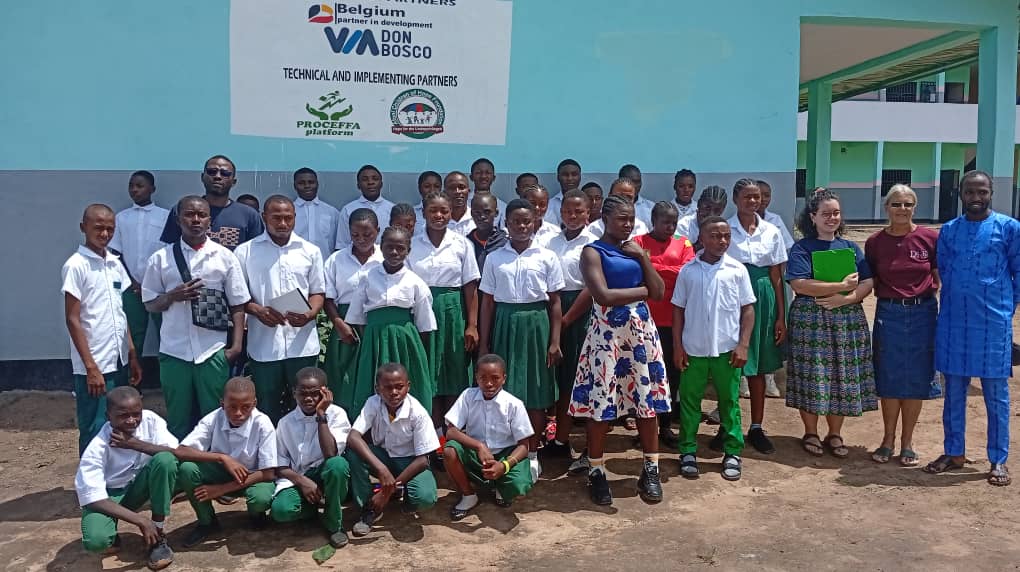
VIA DON BOSCO
Institutional Resilience and Sustainable Youth Entrepreneurship
Our partnership with Via Don Bosco truly sets the standard for international development cooperation. As a globally respected Belgian NGO focused on technical education and job market integration, Via Don Bosco has served as the primary institutional force behind ACOHOF’s long-term structural strength. Through several multi-year funding and program frameworks, they have helped grow our foundation from a local grassroots initiative into a highly resilient, modern hub of technical and pedagogical excellence.
For Via Don Bosco, this partnership has produced results to be genuinely proud of, marked by several major, systemic breakthroughs:
A Shift to the “School-Enterprise” (École-Entreprise) Model
Via Don Bosco led a meaningful move away from short-term, charity-based support toward real, structural self-reliance on our campus. By funding and implementing the *School-Enterprise* approach, they transformed our vocational training into practical business incubation. Our students—especially traumatized, conflict-affected internally displaced persons (IDPs)—are not only learning agriculture. They also learn how to manage high-yield agropastoral businesses, market their products, and earn income. In doing so, the model turns farming into a respected and profitable entrepreneurial path, one that provides genuine economic independence.
Unbreakable Unity During Regional Crisis
When a major socio-political crisis forced ACOHOF to completely relocate its original campus in Tatum and flee to the Adamaoua Region, Via Don Bosco did not step back. While typical emergency aid often disappears during geopolitical disruptions, they responded with long-term strategic flexibility. Their consistent financial and institutional support gave ACOHOF exactly what it needed to survive the forced displacement, quickly establish low-cost boarding facilities in Bankim, and safely welcome hundreds of newly arriving English-speaking IDP youth.
Stronger, More Professional Institutional Governance
Beyond building student-focused infrastructure, Via Don Bosco has invested deeply in the people who make our organization work. They funded ongoing, rigorous capacity-building workshops for our Trainers and also supported annual external audits and strategic reviews. As a result, they strengthened ACOHOF’s internal management systems. This institutional improvement ensures that our financial transparency, pedagogical quality control, and administrative processes align with the highest global expectations.
A Concrete Shield Against Regional Vulnerabilities
The economic opportunities created through Via Don Bosco’s support have directly helped reduce serious social crises on the ground. By giving vulnerable youth a dignified and highly productive alternative, this partnership has helped limit rural out-migration of primary school graduates, lowered the risk of trafficking of girls to major cities for domestic work, and kept conflict-affected young people from being pulled into illegal crop production and armed groups.
A Partnership Built on Equality
Via Don Bosco doesn’t simply provide funding to ACOHOF—they stand with us as true partners in dignity. Their strategic investment has shown that when you equip a displaced community with high-quality technical tools and genuine institutional trust, they can turn a crisis into a model of regional recovery, social inclusion, and self-sustaining economic growth.
They Need a Miracle Today—And It Could Be You
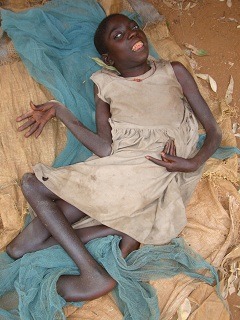
For a child who has endured violence and lost everything, “tomorrow” isn’t something they look forward to—it’s something they struggle to reach. Every day is uncertain. Every moment is about survival.
Their world has been shattered. The safety they once knew is gone. And in its place, there is fear, silence, and unanswered cries for help.
What they need most isn’t complicated—it's protection, stability, and someone who reminds them they are not forgotten.
This is the difference ACOHOF makes.
We stand for these children. We fight for their futures. We refuse to let their stories end in pain.
Because sometimes, a single act of kindness can make a difference. One caring hand. One moment of compassion. One person who chooses to show up.
To them, it’s not small. It’s hope. It’s healing. It’s the beginning of a new life.
Today, you can be that person. You can help a child feel safe again. You can help restore what was broken. You can help rewrite a future filled with possibilities.
Be the reason a child smiles again. Be the hope they’ve been waiting for. Be the difference that changes everything.
Change a Child’s World. Support ACOHOF Today.
Engineers Without Borders (EWB) Sweden
Engineering Hope: The Strong Partnership Between ACOHOF and EWB Sweden
Overview of the Partnership
Since 2015, the Afoni Children of Hope Foundation (ACOHOF) and Engineers Without Borders (EWB) Sweden have collaborated closely, combining trusted community relationships with demonstrated expertise in sustainable engineering. Instead of relying on short-term assistance, their focus is on building durable infrastructure that provides disadvantaged youth with better opportunities, enhances vocational skills, and supports rural communities.
Building Infrastructure for Real Independence
Sustainability is about creating lasting positive change. When ACOHOF and EWB Sweden connect local needs with global sustainable development goals, they make sure each solar installation, computer lab, and water system becomes a long-term resource that benefits communities for years to come. These projects not only strengthen local abilities but also support continued growth and open up opportunities that last well beyond the time engineers leave. What truly makes this work special are the passionate people behind it, transforming engineering plans into solutions that save lives and bring meaningful change to communities.
Key Achievements in Tatum
Renewable Energy Project (Solar Cells)
In Tatum, where the national power grid doesn’t reach, children’s education shouldn’t depend on darkness or limited energy access. To help change this, a dedicated team from EWB Sweden thoughtfully designed and installed a sustainable solar power system at the ACOHOF Family Farm School (FFS+). Some of the key contributors who made this possible include David Lingfors, Emilia Helander, Anna Bergentz, Ylva Gulberg, Joakim Nyman, and Hanner Larsson.
This solar system transformed life on campus. It made it possible to use modern electronic learning tools, to extend safe study hours into the evening, and to improve security for both boarding students and staff.
Computers for Schools Program
Launched in 2017, this program addressed digital isolation by building a modern computer lab at the Tatum campus. It gave disadvantaged and displaced children the technology skills they need to learn, participate, and grow.
The lab was designed and constructed by an EWB Sweden team led by Christian Naccache, with Marcus Forsberg, Martin Engquist, Måns Wallentinsson, Marcus Östgren, and Mikael Ohlsson. The facility helped shift students away from memorization and toward critical thinking through interactive learning software. It also opened the door to information from around the world and supported teachers with advanced tools for online research.
The DevICe Center and Clean Water Efforts (WADIS & SODIS)
To support ongoing technical and health improvements, EWB Sweden set up the Development and Information Systems (DevICe) center in Tatum. Led by engineer and former KTH educator Stefan Karnebäck, together with Gustav, the center became a regional hub for infrastructure monitoring.
They introduced two methods—Solar Water Disinfection (SODIS) and Water Disinfection Systems (WADIS). Families were taught how to use solar UV light in clear PET bottles to eliminate waterborne pathogens. As a result, water-related illnesses among local children dropped significantly.
Human Connection: Ongoing Student Involvement and Field Visits
What makes the partnership stand out isn’t just the engineering work; it’s the consistent, practical involvement of young engineers. Swedish engineering students, mostly from Uppsala University, regularly visit the community to conduct baseline surveys, map the terrain, test soil and water, and audit the performance of energy systems.
These visits create real two-way learning. Students bring advanced technical knowledge, while local young people share environmental experience and on-the-ground insight. Living within the community also helps engineers understand the real human effects of their solutions, ensuring the outcomes fit local culture and are truly accepted.
The Waccess Project
Engineering Hope Through Water Access in Tatum
A Vision Built on Survival and Dignity
The Waccess Project was far more than an engineering initiative—it was a humanitarian effort rooted in the belief that genuine resilience begins with access to clean water. For years, Tatum, a high-altitude village in Cameroon’s Northwest Region, struggled with unsafe water sources. The result was serious illness, interrupted education, and a constant financial burden on families.
ACOHOF and EWB Sweden understood that clean energy and digital learning can’t succeed without basic survival needs. That’s why they committed to creating a lasting, community-wide water solution that could truly change lives in Tatum.
Discovering the Real Blocker to Development
By 2017, the partnership had already installed solar power and a computer lab at the Family Farm School. But field research showed that waterborne illness was one of the biggest drivers of clinic visits, that children frequently missed school due to illness, and that families were spending money on healthcare rather than education or livelihoods. In other words, the real obstacle wasn’t only infrastructure, but also public health.
This discovery led directly to Waccess, linking engineering innovation to the essential need for safe water.
Listening, Learning, and Redesigning
The project was originally planned in Sweden as a rainwater harvesting system. But after a 2018 field mission in Tatum, the plan changed. Engineers studied water flow, consulted with local residents, and learned about seasonal shortages and the region’s geography. They found that rainwater harvesting wouldn’t reliably provide enough water year-round. Instead, natural mountain springs offered a better and more centralized option.
Adapting the Plan
The team abandoned the original design and created a gravity-fed pipeline system to bring clean spring water to the school and the surrounding community. This shift turned the project into a major long-term infrastructure effort.
Mobilizing Resources for a Lasting Solution
With the new plan came a need for extensive pipeline construction and water catchment systems. ACOHOF and EWB Sweden reached out to international partners, donor support, and corporate social responsibility contributions to fully fund a technically reliable solution for Tatum’s decades-long water crisis.
Challenges Caused by the Anglophone Crisis
Just as implementation was nearing completion, the intensifying Anglophone Crisis pushed Tatum into a conflict and stalled the project. Curfews, internet shutdowns, communication breakdowns, school closures, displacement, and violence forced EWB Sweden teams to withdraw and caused construction to be suspended.
The Impact That Could Have Been
Even though Waccess wasn’t finished, it had the potential to dramatically reduce waterborne diseases, improve children’s health and nutrition, lower school absenteeism, support women and girls by reducing time spent collecting water, strengthen the local economy by cutting healthcare costs, and increase long-term community resilience through reliable infrastructure.
Thanks to ACOHOF’s trust and EWB Sweden’s expertise, Tatum was on the verge of a historic breakthrough.
Adapting to Crisis: Survival Engineering
When large-scale construction couldn’t continue, the partnership shifted toward solutions that could work at the household level. Families were trained in Solar Water Disinfection (SODIS), using sunlight to purify water in clear PET bottles. It’s a decentralized, zero-cost method that can still work even during conflict.
A Promise That Still Lives On
Even though the pipelines were never built, Waccess remains a symbol of ACOHOF’s long-term dedication, the serious engineering work behind it, and the fundraising efforts needed to make this kind of future development possible when peace returns.
The spirit of Waccess continues through families using solar water purification, healthier children attending school, and ongoing advocacy for Tatum’s right to clean water.
Relocation to Bankim and the Ongoing IDP Crisis
Due to worsening conflict, ACOHOF relocated its operations to Bankim in Cameroon’s Adamawa Region. The Bankim campus now includes the Family Farm School and the Bilingual Technical Vocational College of Agriculture and Entrepreneurship.
Current Challenges in Bankim
The Bankim campus serves as a sanctuary for displaced youth fleeing violence; however, its infrastructure is under significant pressure. Similar to Tatum, Bankim faces a water crisis that jeopardizes students' health, an energy shortage that leaves facilities without power after sunset, and the challenge of housing and feeding nearly 300 young boys and girls. The majority of these young boys and girls are internally displaced from the conflict in the anglophone regions and have only ACOHOF as their surrogate family. Additionally, the campus has limited resources to develop a modern computer laboratory, which is essential for vocational training.
A Global Call to Action for Bankim
Building on what was achieved in Tatum, ACOHOF is now urgently appealing to EWB Sweden, other global EWB chapters, humanitarian organizations, corporate partners, and individuals worldwide for support.
How You Can Help:
- Power the campus by designing and funding a large solar grid to light dormitories, extend study time, and run agricultural equipment.
- Provide clean water through engineered purification and distribution systems to eliminate waterborne diseases.
- Set up a modern computer lab by donating hardware, software, and networking infrastructure to support vocational and digital entrepreneurship training.
While others see only crisis, the global engineering community sees an opportunity. Help us transform the Bankim campus into a safe, educational, and sustainable place of hope.