Afoni Children of Hope Foundation
ACOHOF - Cameroon
Motto: Hope for the Underprivileged
Afoni Children of Hope Foundation
ACOHOF - Cameroon
Motto: Hope for the Underprivileged
The IECD & ACOHOF Strategic Partnership
Over the years, the Afoni Children of Hope Foundation (ACOHOF) has grown by building strategic partnerships that help it carry out its mission: supporting vulnerable young people through education and vocational training. One of its strongest partnerships was with the European Institute for Cooperation and Development (IECD), an international organization with decades of experience in agricultural training and rural development.
Since the 1990s, IECD has been active in Cameroon through its Family Farm School (FFS) approach. This model equips young people with practical agricultural skills while also encouraging entrepreneurship and contributing to community development.
Thanks to this collaboration, ACOHOF was able to strengthen the Family Farm School in Tatum even further. The school was designed in line with international best practices yet adapted to local realities and needs.
Transforming Education in Tatum
With IECD’s support, ACOHOF refined its vocational training approach by introducing the Pedagogy of Alternation—a dual learning method that combines the following:
- Classroom-based teaching
- Practical training on farms and in real everyday life situations
By putting families and communities at the center of the learning process, students aren’t just taught knowledge—they are guided to apply it directly where they live and work.
As a result, the training became more practical, more relevant, and more effective. The goal was to prepare young people to build self-reliant agricultural businesses and to take on leadership roles in their communities.
The ACOHOF FFS Tatum Piggery Project as a
Work-Based Learning (WBL) Initiative:
As part of the same partnership, ACOHOF also created hands-on learning facilities to support students. One of the clearest outcomes was the development and operation of a piggery unit at the ACOHOF Family Farm School.
The piggery project was:
- Built with support through the IECD partnership framework
- Stocked with pigs and fully integrated into the training activities
- Used as a practical learning space where students could gain real experience
This initiative gave students direct exposure to:
- Animal husbandry
- Feeding routines and farm management
- Hygiene practices and disease prevention
- Basic agricultural entrepreneurship
Before long, the piggery became a key part of the school’s training program, turning theoretical lessons into daily, real-world practice.
An Abrupt Interruption
Despite these improvements, the socio-political crisis affecting Cameroon’s North-West and South-West regions, which escalated from late 2016, severely disrupted progress in Tatum.
The crisis led to:
- Widespread insecurity and threats to people’s safety
- The destruction and looting of schools and other community infrastructure
- The displacement of thousands of families and students
As the situation worsened:
- The ACOHOF Family Farm School in Tatum was forced to stop its activities
- Staff and students fled to protect themselves
- Training activities came to a sudden halt
Even though the piggery project had been newly constructed, stocked, and fully operational, it was later abandoned when all school operations ceased, and we fled for safety shortly after it began.
A Lesson on the Fragility of Rural Development
The experience in Tatum illustrates an important truth:
Even development projects that are carefully planned and genuinely effective can quickly destabilize when conflict and insecurity arise.
In ACOHOF’s case:
- Investments in infrastructure and training systems were cut short
- Educational continuity was lost for many students
- A long period of effort was undermined by circumstances outside the organization’s control
It also reflects the challenges grassroots organizations face in fragile environments, where they may experience uncertain—and easily reversed—progress.
Continuing the Mission
Although the piggery project had just been built, stocked, and was fully operating, it was later abandoned when all school activities stopped, and we fled for safety shortly after it began.
The Tatum example shows:
- What can be achieved through strong partnerships
- The real challenges communities face in conflict-affected areas
The IECD and ACOHOF partnership is a strong example of how international expertise and local commitment can work together effectively. Together, they developed a rural training model that was practical, inclusive, and impactful.
At the same time, the sudden interruption of the piggery project at the ACOHOF Family Farm School reinforces how urgently rural communities need stability and sustained support. Organizations like ACOHOF continue working in difficult conditions to help build a better future for the people they serve.
ACOHOF Rural Investment Fund
ARIF Africa
Promoting Hope and Human Dignity Through
Financial Inclusion
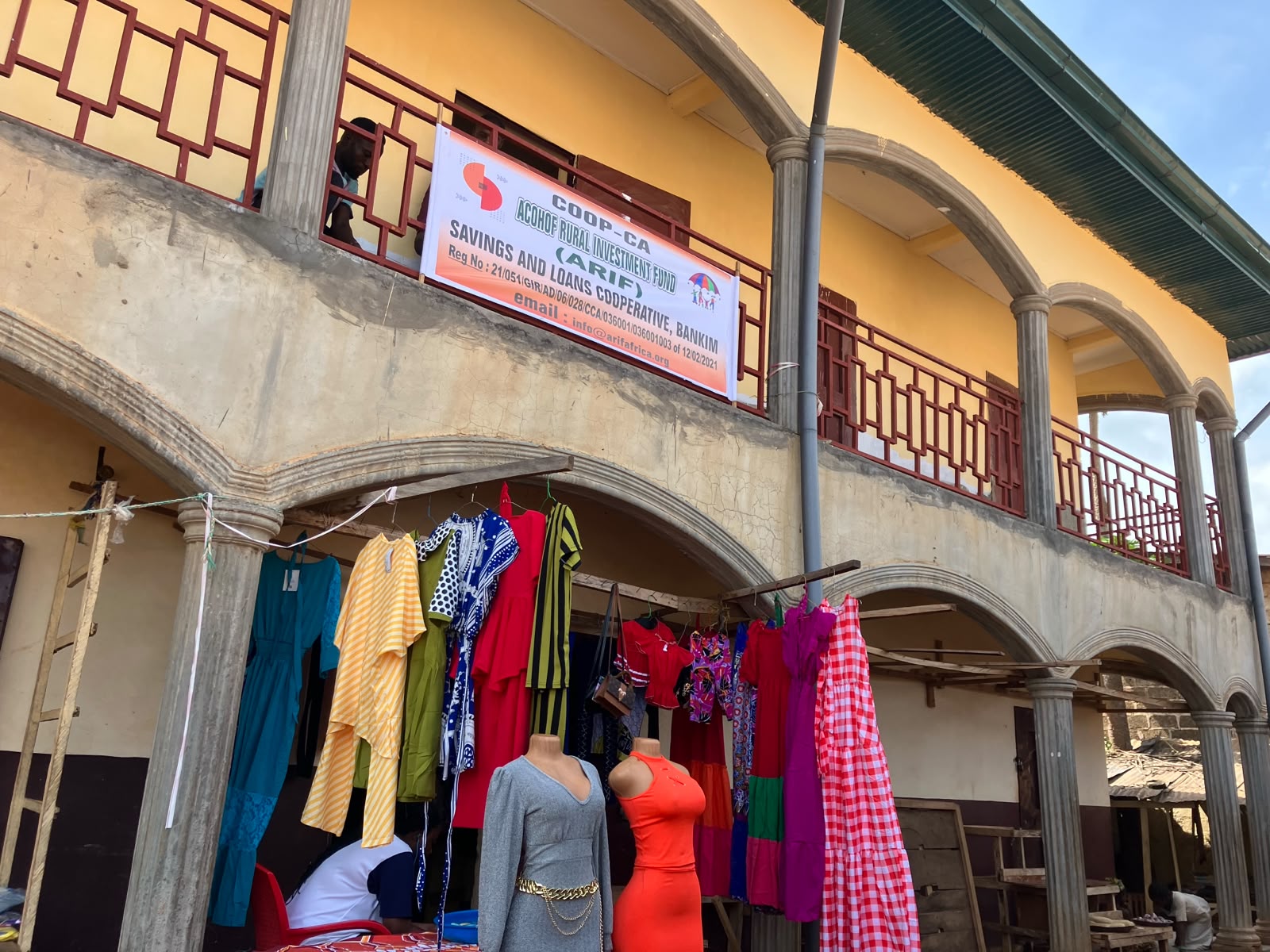
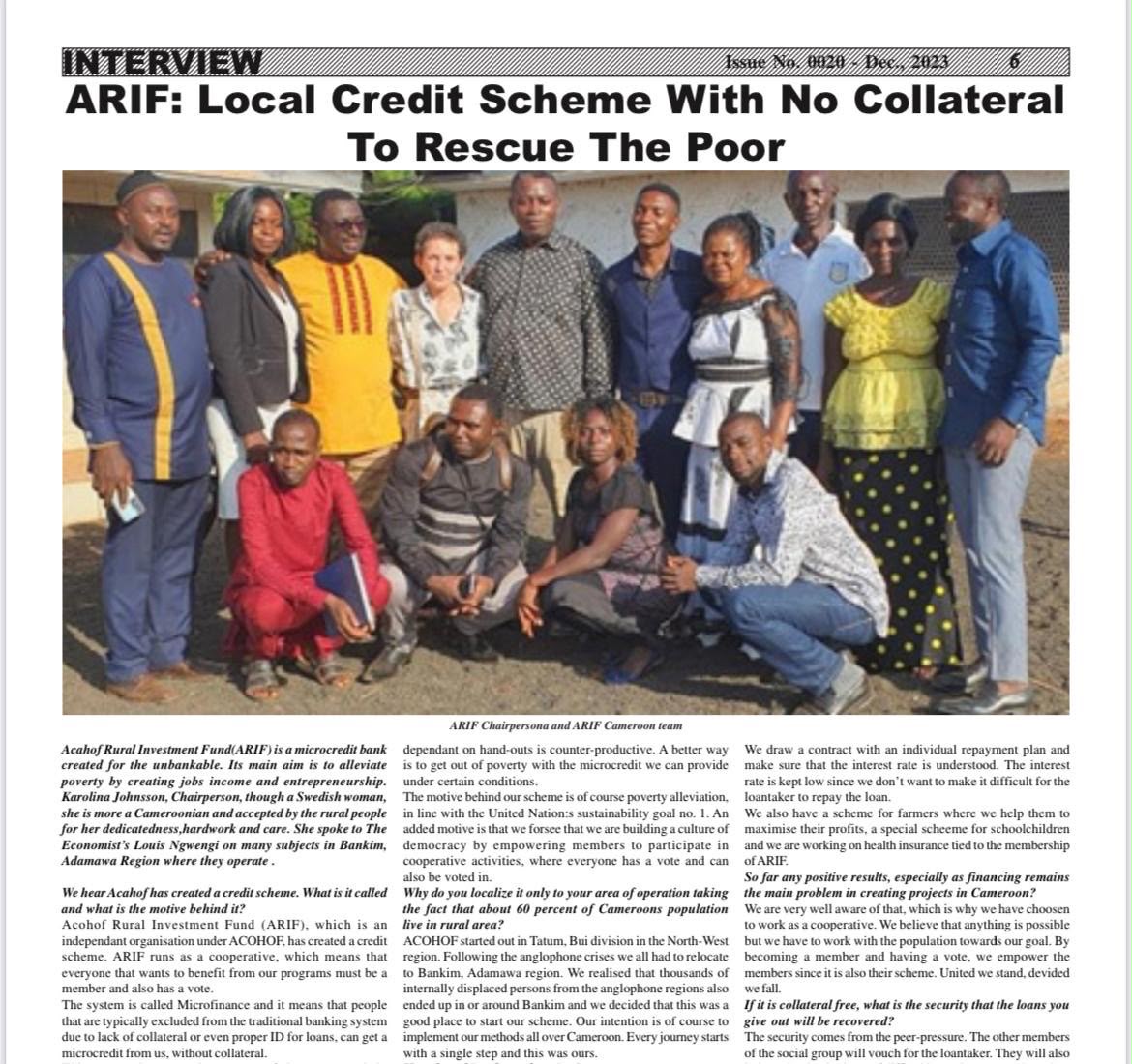
The story of ARIF Africa (ACOHOF Rural Investment Fund) shows what can happen when global support meets strong local determination. ARIF is an independent and results-driven financial initiative operating within the Afoni Children of Hope Foundation (ACOHOF). Its main purpose is to improve financial inclusion. Together, ACOHOF and ARIF create a connected system in which the technical vocational training delivered through Family Farm Schools is supported by the funding needed to break the cycle of intergenerational poverty. This also helps reduce rural depopulation and encourages communities to build their own local economic stability.
ARIF was launched by Karolina Johnsson, the founder of ACOHOF-Sweden and its chairperson. Driven by a commitment to find a workable way to support grassroots economic empowerment, Karolina Johnsson traveled to Bangladesh in 2019 to study the practices of the well-known Grameen Bank. Seeing how respectful, small-scale credit could lift entire communities, she decided to adapt Professor Muhammad Yunus’s Nobel Prize-winning microfinance approach to the specific social and economic realities of rural Africa. After her return, Johnsson worked with ACOHOF to make this vision a reality. She placed ARIF’s executive operations in Bankim, in Cameroon’s Adamawa Region, where many people lack access to basic financial safety nets.
What Drives ARIF’s Real Impact
Although successful global models inspire ARIF’s design, strong local leadership drives its long-term results. In Cameroon, people sustain ARIF’s influence by turning strategy into real change in communities:
Mr. Emmanuel Sengafor (Chairman & Project Director, Cameroon):
As the key link between governance and daily operations, Mr. Sengafor provides excellent project management and strategic guidance to ARIF’s board in Cameroon. His commitment ensures that ARIF uses resources transparently, efficiently, and in line with the region’s sustainable development priorities.
Mr. Ali Eric Nfor (Human Resources Supervisor & Auditor, ARIF):
As the guardian of organizational integrity, Mr. Nfor strengthens internal control through careful oversight of human resources, thorough financial audits, and the enforcement of internal procedures. In doing so, he protects ARIF’s values of transparency, accountability, and long-term institutional strength.
Mr. Terence Fonyuy:
As an important connector within the wider network, Mr. Fonyuy supports the work by advocating for the mission, collaborating closely, and contributing operationally. His efforts strengthen the connection between ACOHOF’s education programs and ARIF’s economic empowerment activities, helping expand the movement’s overall impact on the community.
Strengthening People Through Partnership and Transparency
With guidance from Sweden and passionate on-the-ground implementation in Cameroon, ARIF Africa and ACOHOF demonstrate that providing people with practical means to become self-sufficient goes far beyond charity. This approach restores dignity and builds strong communities that can rely on themselves, starting from the grassroots level and moving upward.